
This is the third blog from a series focusing on how public clouds meet telecommunication operators’ business demands. In the previous two blogs, we talked about how Amazon Web Services (AWS) and Google Cloud Platform have enabled telcos to run critical workloads on public clouds. In this last part of our series, you’ll hear about

In the first part of this blog series, we discussed the run-time (in)security challenge, which can leave your code and data vulnerable to attacks by both the privileged system software of the public cloud infrastructure, as well as its administrators. We also introduced the concept of trusted execution environments and confidential comput

Anyone who has ever built a product wants user feedback – and we in open source want it more than anyone else, and place higher demands on it than anyone else. However, this feedback can be hard to give, hard to receive, and hard to act upon. My product is open source software documentation, and
![Accelerate IT/OT convergence in Industry 4.0 [Part II]](https://ubuntu.com/wp-content/uploads/29cd/Part-2-Industry-4.0-1.png)
Welcome to Part II of this three-part mini-series on bridging the gap between operational technology (OT) and information technology (IT) in Industry 4.0. In Part I, we set the stage for the remainder of the series and gave an overview of IT and OT, the two technological layers of modern industrial factories. In this blog,

The two companies will leverage their respective strengths to build a first-of-its-kind software foundation enabling the next-generation automotive operating system ERLANGEN, Germany, October 27, 2022 – Elektrobit and Canonical today announced a partnership to bring the benefits of Canonical’s Ubuntu operating system to automotive softwar

Have you ever wondered how AWS pricing actually works? You launch a startup or a new project in your organisation. You decide to use Amazon Web Services (AWS) as your primary cloud platform. You estimate costs based on listed prices, and rest assured that your startup/project will meet its budget. However the actual bill does
Google just announced that they have submitted an application for Kubeflow to become an incubating project in the Cloud Native Computing Foundation (CNCF). It is an initiative supported by the Kubeflow Project Steering group. The request is visible to everyone and it represents a game changer for the rhythm which Kubeflow will develop. It
The verification report is built with Charmed Kubernetes v1.21-v1.23 and eSDK(huawei-csi) v2.2.16. Project Overview Project background Huawei OceanStor Dorado V6 all-flash storage systems are designed for enterprises’ mission-critical services. The SmartMatrix full-mesh architecture ensures hardware redundancy and fast service switchover

Newsletter signup

Taking a new device from an idea to production readiness can be a challenge. Hacks or workarounds can help you deliver a proof of concept, but they can negatively impact production devices. A development kit can be great for quickly proving out an idea, but oftentimes the hardware constraints will be more stringent in production
![Accelerate IT/OT convergence in Industry 4.0 [Part I]](https://ubuntu.com/wp-content/uploads/3c6e/Part-1-Industry-4.0.png)
Welcome to this three-part mini-series on bridging the gap between operational technology (OT) and information technology (IT) in Industry 4.0. Throughout this series, we will discuss the key challenges industrial manufacturers face when trying to accelerate their digital transformation. We will understand why legacy update approaches and
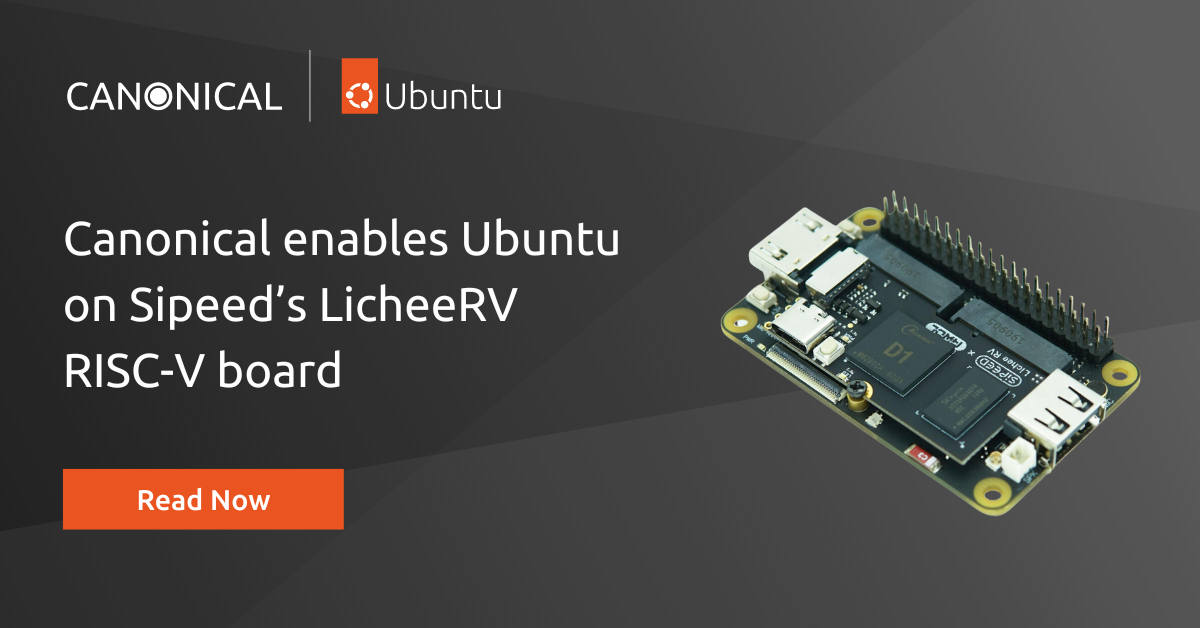
Canonical continues to expand the availability of Ubuntu running on RISC-V processors and hardware. Followed by a few announcements during the RISC-V Summit China 2022 we are proud to announce the Ubuntu release for additional RISC-V hardware – Sipeed’s LicheeRV board. RISC-V, defining of open computing Open standards and collaboration ar

Canonical has conducted surveys about Kubernetes and Cloud Native Operations in the past two years. As a member of the Cloud Native Computing Foundation (CNCF) and an active part of the community, we contribute the anonymised results back, along with our analyses and the insights of industry experts. Everyone can submit an answer anonymou
![What does OTA mean? [Part I]](https://ubuntu.com/wp-content/uploads/be42/andrew-wulf-Tc3c8ZDIbxw-unsplash.jpg)
In the second part of this blog series, we cover the top 3 reasons why OTA updates are important. Read more about the importance of OTA technology in the blog post here. OTA is a term commonly used when working with any type of device. Simply, the abbreviation OTA means ‘over-the-air’, and refers to the
The Steam snap has evolved a lot over the last six months. Join us for a tour of the current state of play and help inform our plans for the future.
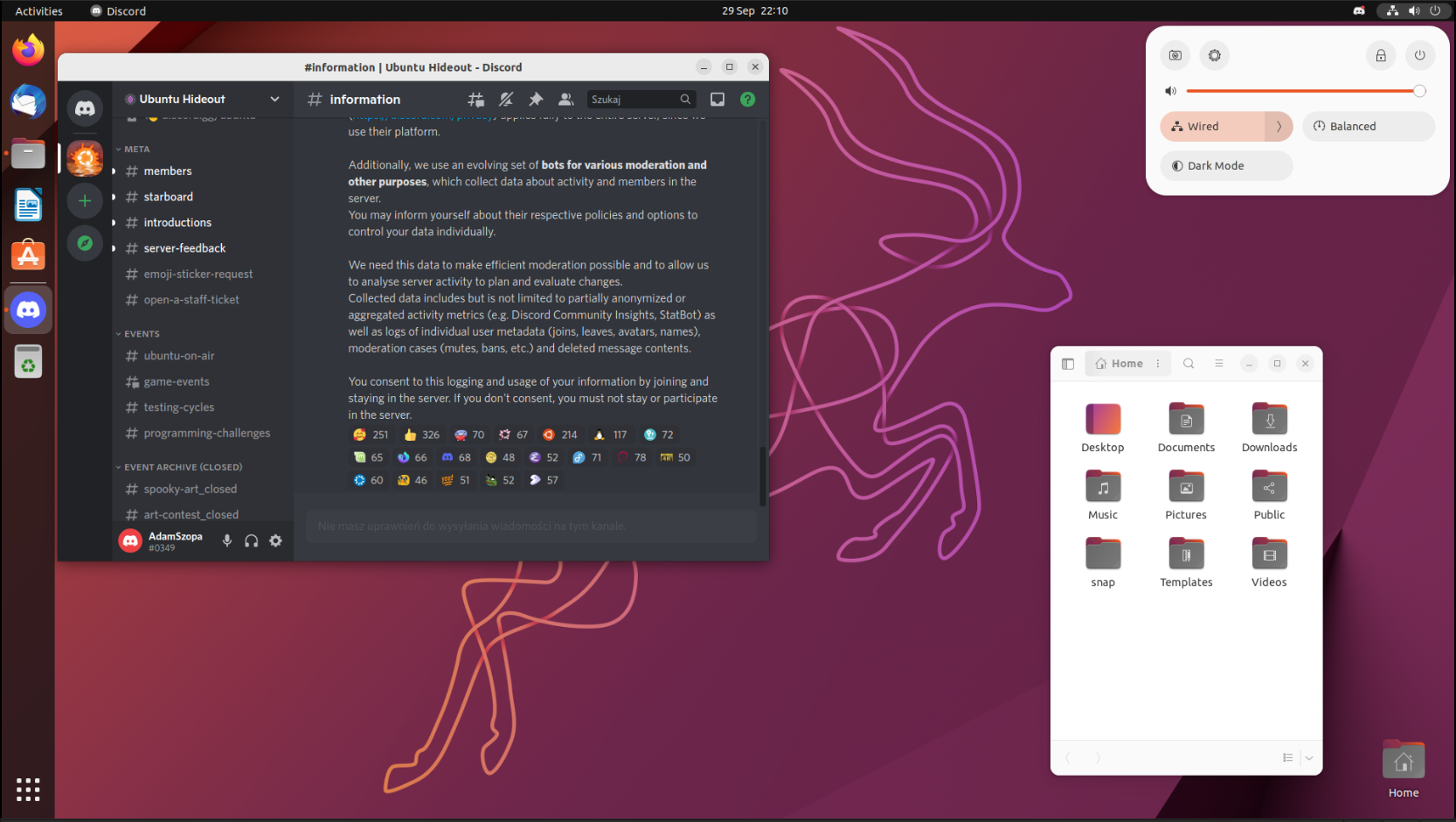
The latest release of Ubuntu Desktop comes with improved productivity features, a new official flavour and performance improvements for Bluetooth devices.
Canonical’s Charmed Kubernetes is a suite of open-source Kubernetes software bundled with many addons, including CNIs, CSIs, monitoring tools and cloud integrations. As Juju supports AWS, Charmed Kubernetes can be deployed and run on AWS seamlessly. In fact, many of our customers run their Charmed Kubernetes on AWS for production workload
Ubuntu tech blog
Deep dives for developers
Visit the Ubuntu Tech Blog for deep dives into product features, step-by-step tutorials, and the latest updates from Canonical's engineering teams.